

Why aggregates are the cornerstone of construction
Published 6 August 2026 · Mathrani Mining & Infrastructure
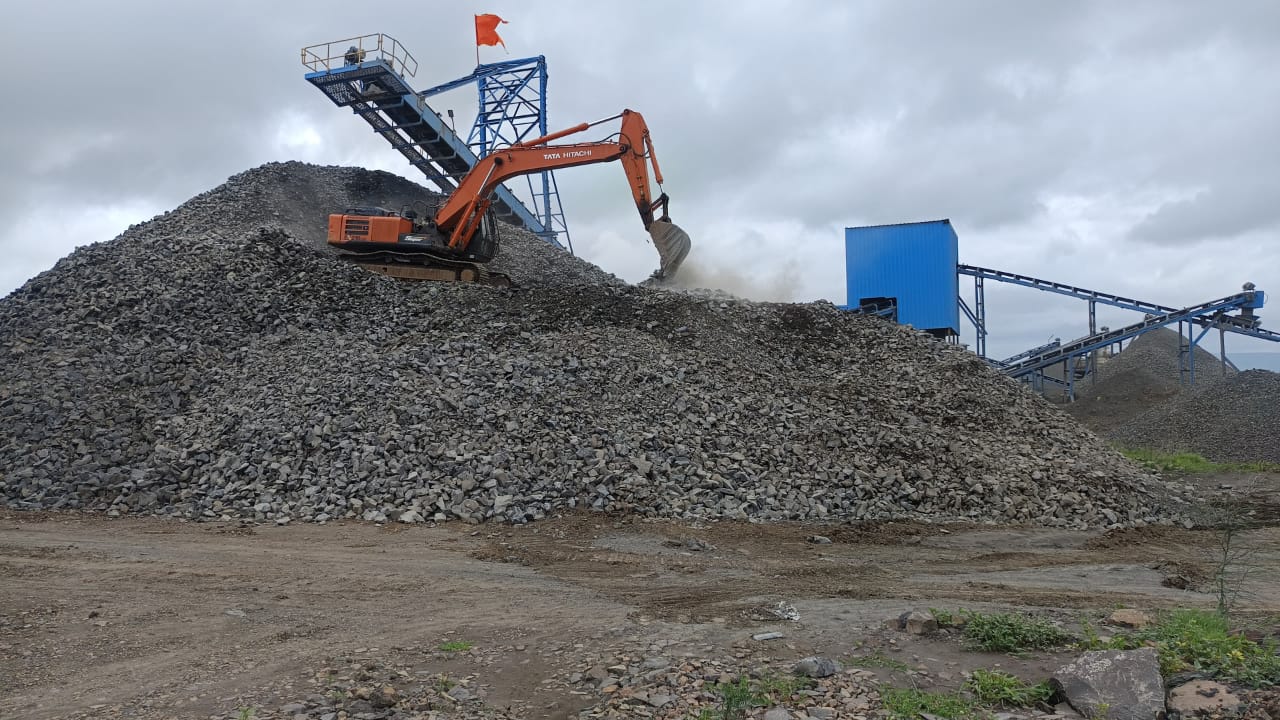
Cement gets the attention because it is the ingredient with a brand name on the bag. But aggregate, the crushed stone and sand that cement binds together, makes up roughly 70 to 80 percent of concrete by volume. It is also the part of the mix that gets the least scrutiny on most sites, which is exactly backwards.
Aggregate does more than fill space
It is easy to think of aggregate as inert filler that bulks out an expensive binder. In practice, aggregate governs strength, shrinkage, durability and even the finish of the concrete. A poorly graded aggregate forces more cement paste into the mix to fill the gaps between particles, which raises cost, raises shrinkage cracking and does not necessarily raise strength.
Gradation is the whole game
Gradation means the spread of particle sizes in a sample, from the largest stone down to the finest sand. A well-graded aggregate has enough of each size that smaller particles fill the gaps left by larger ones, leaving the least possible void space for cement paste to fill. IS 383 sets the gradation bands that construction aggregate is expected to fall within, and it is the first thing worth asking a supplier for, not the price.
What poor aggregate actually costs you
- More cement for the same strength. Gap-graded or dirty aggregate needs extra paste to achieve workability, which is a direct cost increase disguised as a material problem.
- Shrinkage cracking. More paste means more drying shrinkage, which shows up as cracks in slabs and plaster months after the contractor has left site.
- Inconsistent strength between loads. If a supplier's gradation drifts between deliveries, cube results drift with it, and a site engineer ends up chasing a moving target.
- Excess silt and clay. Fine material that is not sand, clinging to the aggregate surface, weakens the bond between paste and stone. IS 383 caps this for good reason.
Why single-source aggregate matters
Aggregate bought from a changing set of traders, sourced from whichever quarry had stock that week, will vary in parent rock, shape and gradation even if every load technically passes a sieve test. A single quarry, crushed and screened the same way each time, gives a site the one thing a changing supply chain cannot: the same material on load one hundred as on load one.
What to actually check before you order
Ask for a current sieve analysis report, not a general specification sheet. Ask where the material is quarried, not just where it is delivered from. And if the job is significant enough to matter, ask for a sample delivery before committing to the full quantity. None of this costs you anything to ask, and a supplier who cannot answer quickly is telling you something.
Every size we supply is tested to IS 383 at our own plant. See sizes, applications and test results on the aggregates page.
Request a quote